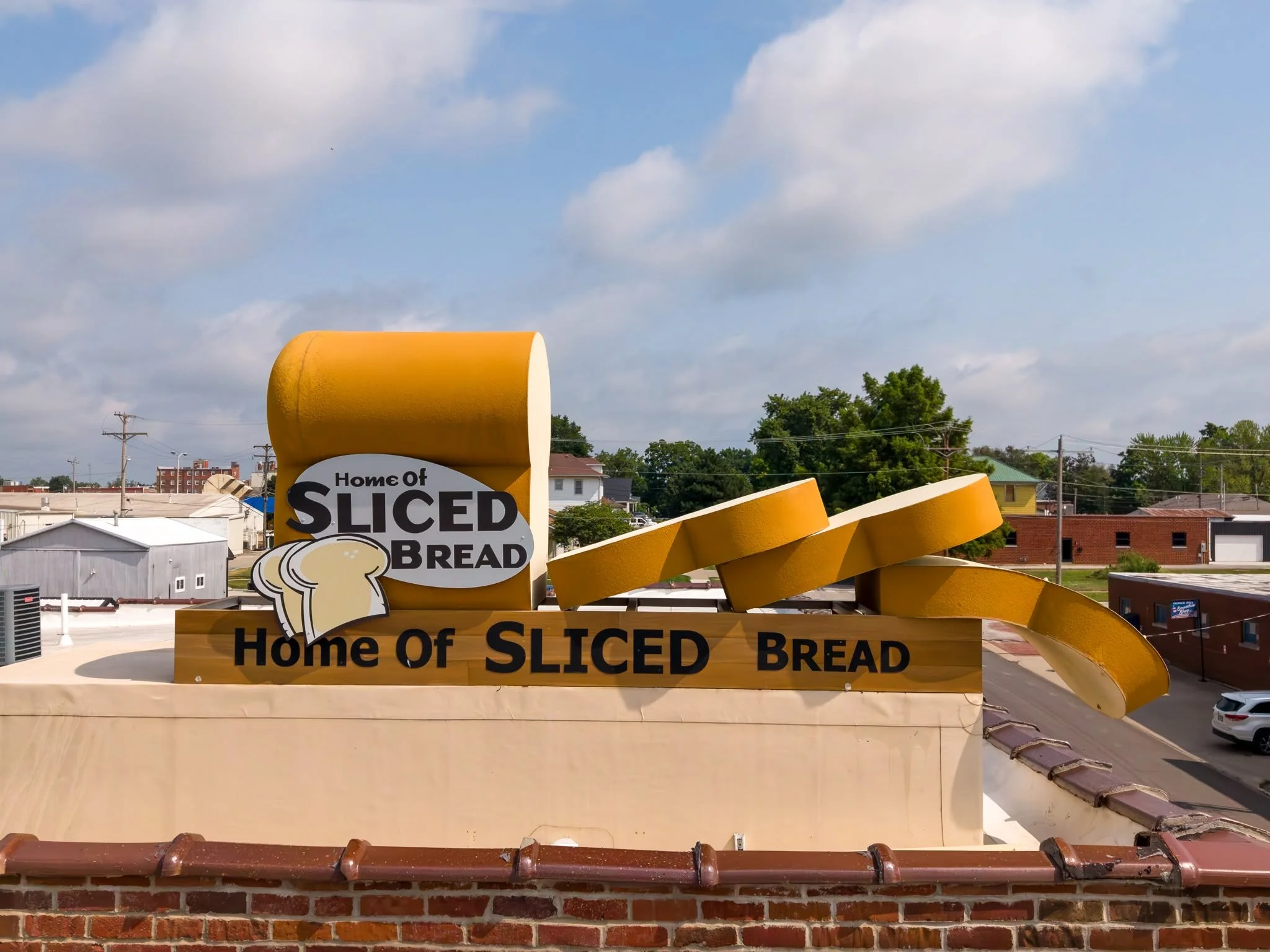
Chillicothe Baking Company | Chillicothe, Missouri
Otto Rohwedder had a wife, two children, and three jewelry stores that provided them with a secure living.
He was a jeweler and watchmaker by trade, accustomed to working with small measurements and precise mechanisms. For years, he had been studying a problem found in homes everywhere: how to cut through the firm crust and soft center of a loaf without crushing it or leaving every slice a different size. In 1916, he sold all three stores to build a machine that could do it evenly. A year later, a fire swept through the factory where the machine was being developed, destroying his prototype and blueprints. The income from the jewelry stores that had supported his family was already gone. Now the invention he had given up that security for was gone too.
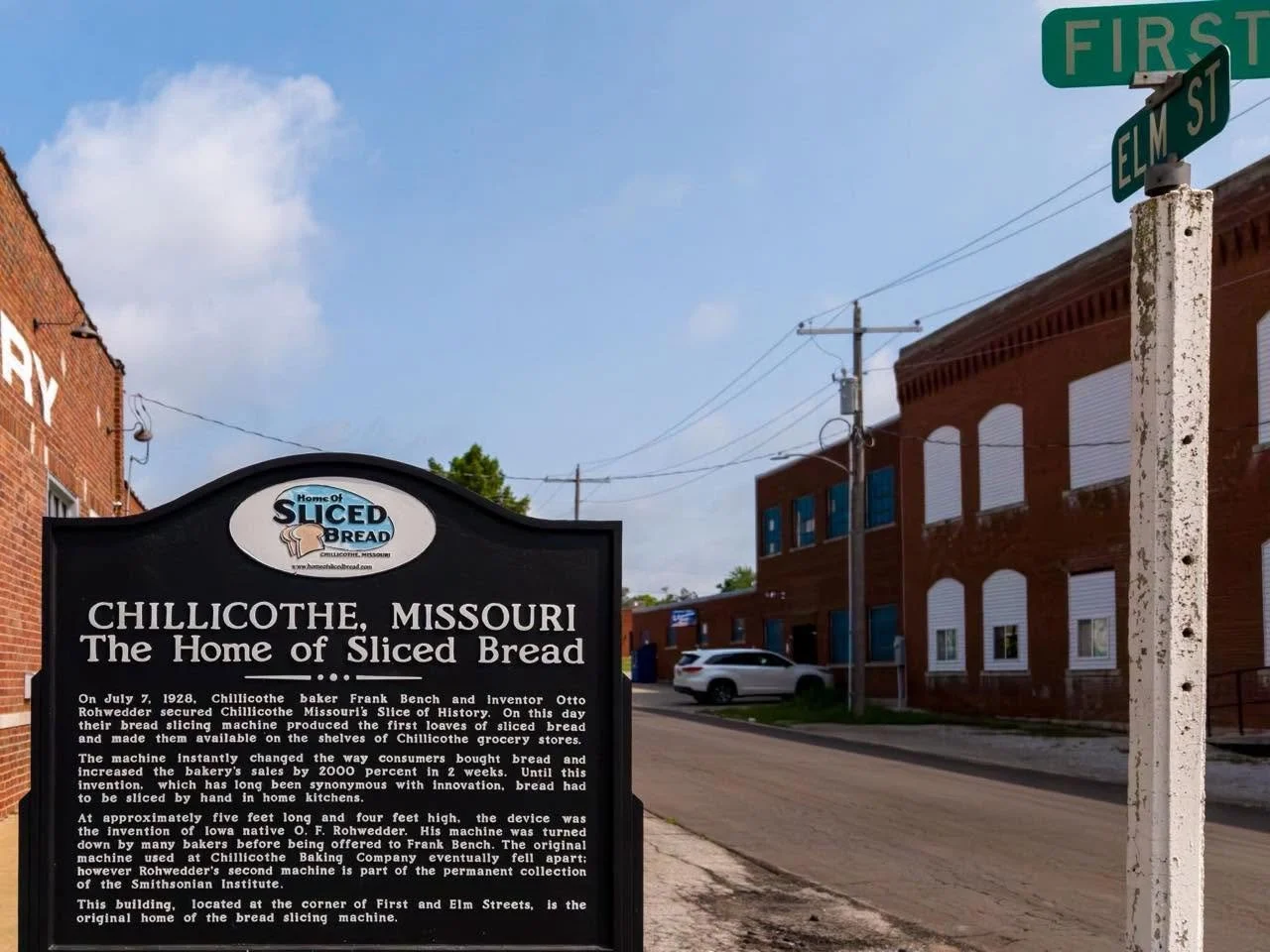
Rohwedder spent years trying to recover. He worked other jobs, rebuilt the machine, and continued searching for a way to make the idea practical. During those years, he came to know Frank Bench, a Chillicothe baker who was also an inventor. Bench had built the Chillicothe Baking Company at First and Elm, but baking bread was only part of his work. He was constantly looking for better ways to move it, display it, and sell it throughout the region. By 1923, the two men were already working together. Rohwedder helped Bench develop a folding metal box that could be used to ship bread through the mail, and they traveled together to Washington to present it to a federal committee. A few years later, they designed and patented a bread display rack together.
Long before sliced bread reached Chillicothe, Rohwedder and Bench had already spent years working through the ordinary problems surrounding a loaf of bread. Then Bench nearly lost his own life’s work. Fires struck his bakery in 1926 and again in 1927. By the following year, the business he and his wife had built was nearing bankruptcy. At the same time, Rohwedder finally had a commercial version of his slicing machine ready. Other bakers believed sliced bread would dry out too quickly, but Bench understood the man behind the machine. He knew how long Rohwedder had carried the idea because he had already worked beside him. Bench bought the first machine and installed it inside his bakery.
One man had spent more than a decade trying to recover an invention his family had already sacrificed for. The other was trying to save the business his own family had built. They needed the same machine to work. On July 7, 1928, when the first loaves were ready to be sliced, Rohwedder’s wife, Carrie, and their children were there to see what would become of the idea their family had carried for more than a decade. Their 13-year-old son, Richard, fed the first loaf into the machine while they watched.
The sliced bread went out to grocery stores across Chillicothe. Within two weeks, sales at the Chillicothe Baking Company had increased by 2,000 percent. Soon, bakers from St. Joseph and Kansas City were bringing truckloads of bread here to be sliced while they waited for machines of their own.The buyers had no idea what they were holding. They could not see the fires, the years, the lost income, the husbands afraid they had failed their families and still trying to make it work, the wives carrying the uncertainty, or the children watching to learn what would become of it. They were just buying bread.