Rock Barn | Trenton, Missouri
In 1930, farms covered 95.6 percent of Grundy County. Corn, hay, cattle, sheep and hogs occupied nearly the whole map. The annual Farm Revue gave farmers and their children a place to bring livestock before judges, buyers and neighbors.
But Grundy County had lost its permanent fairgrounds. The old fair association dissolved in 1927 with $7,500 in debt. Its grounds were divided into lots, and its buildings were removed. The Farm Revue and horse show continued elsewhere, but the Depression forced the revue to reduce its size after 1936. Without adequate shelter for the animals, organizers abandoned the horse show altogether.
Work on a permanent livestock pavilion began at Eastside Park on June 2, 1938. About twenty Works Progress Administration laborers started by cutting weeds and clearing the three-acre tract. Eventually, about forty men worked on the project.
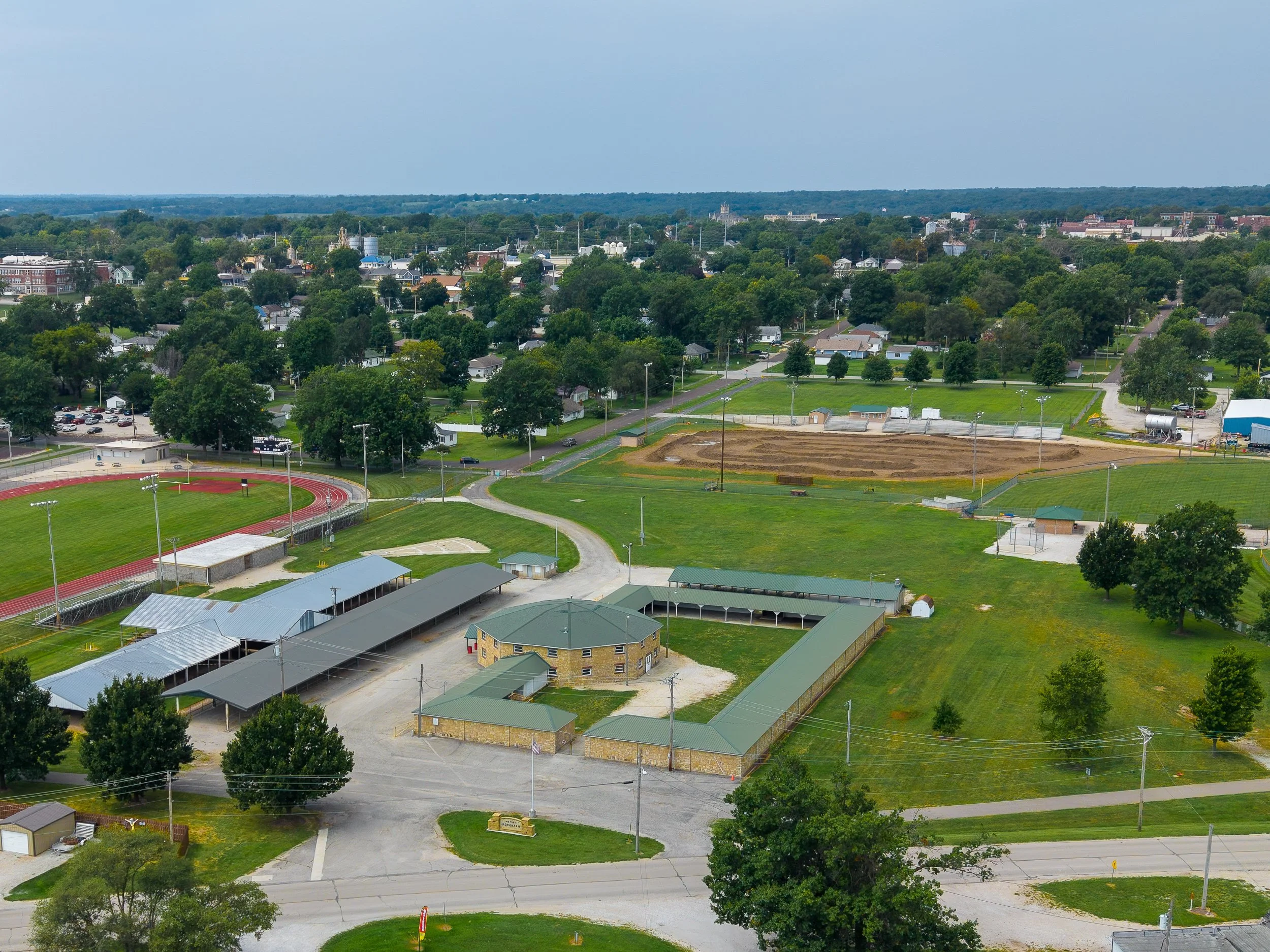
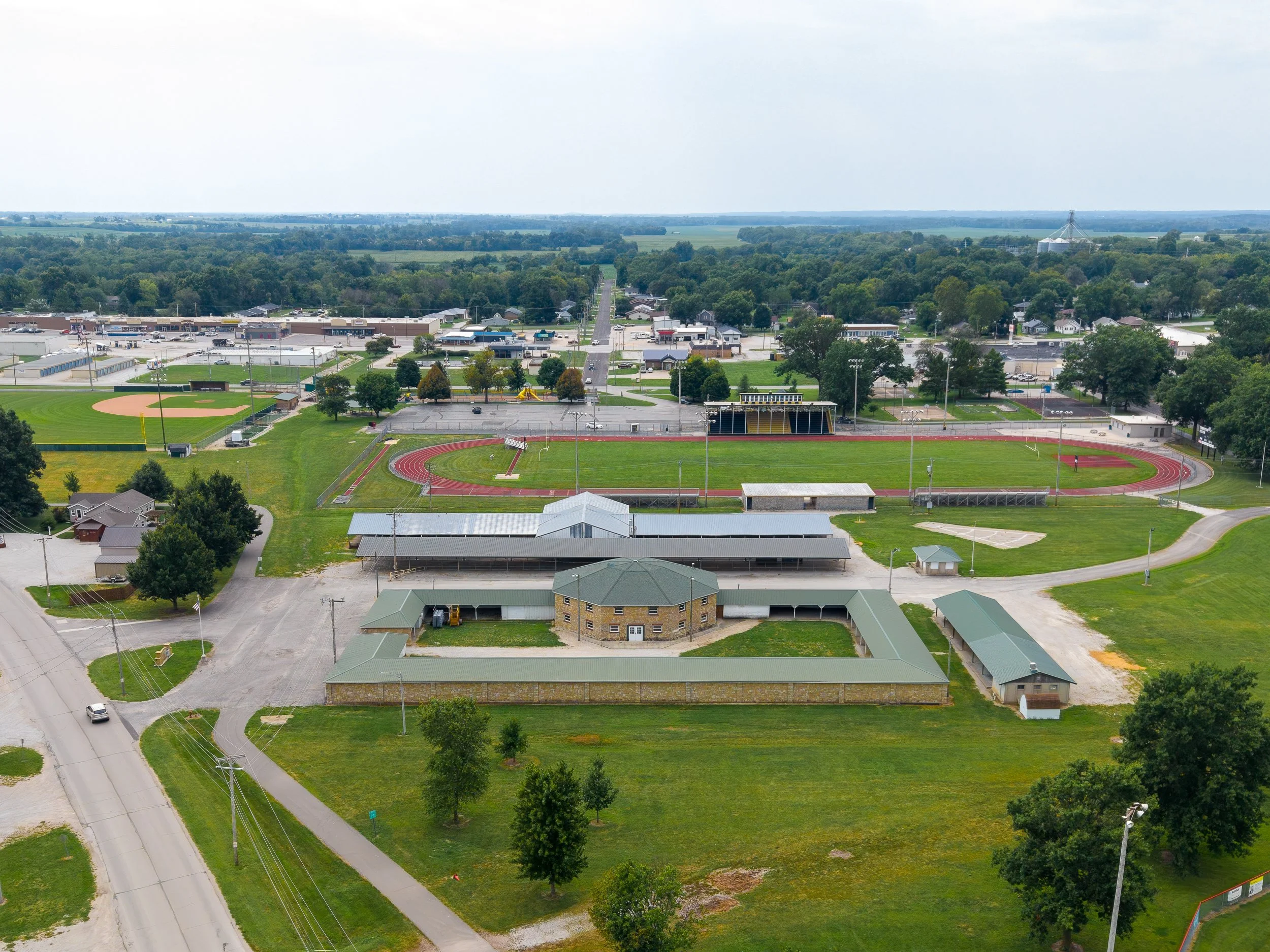
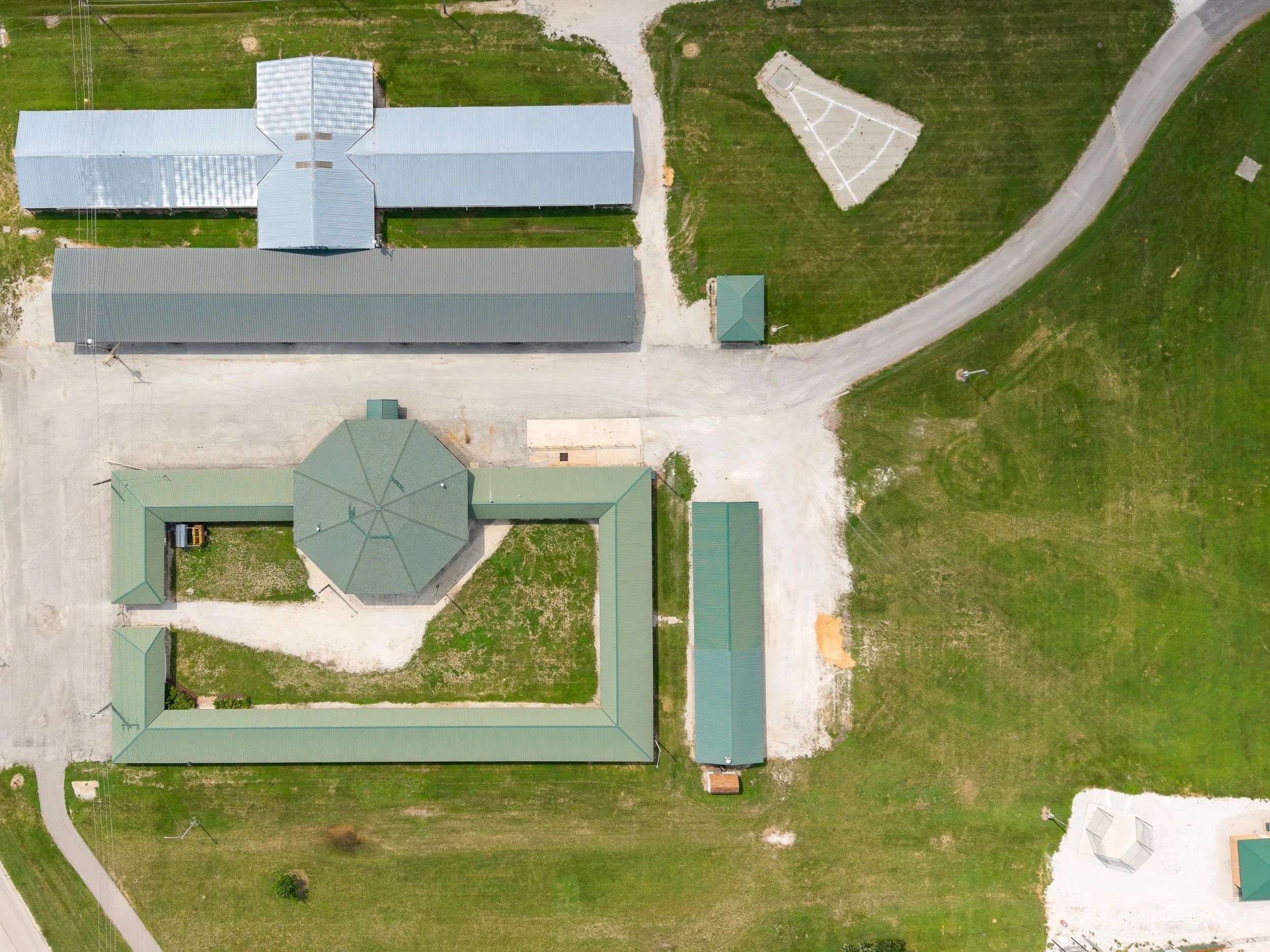
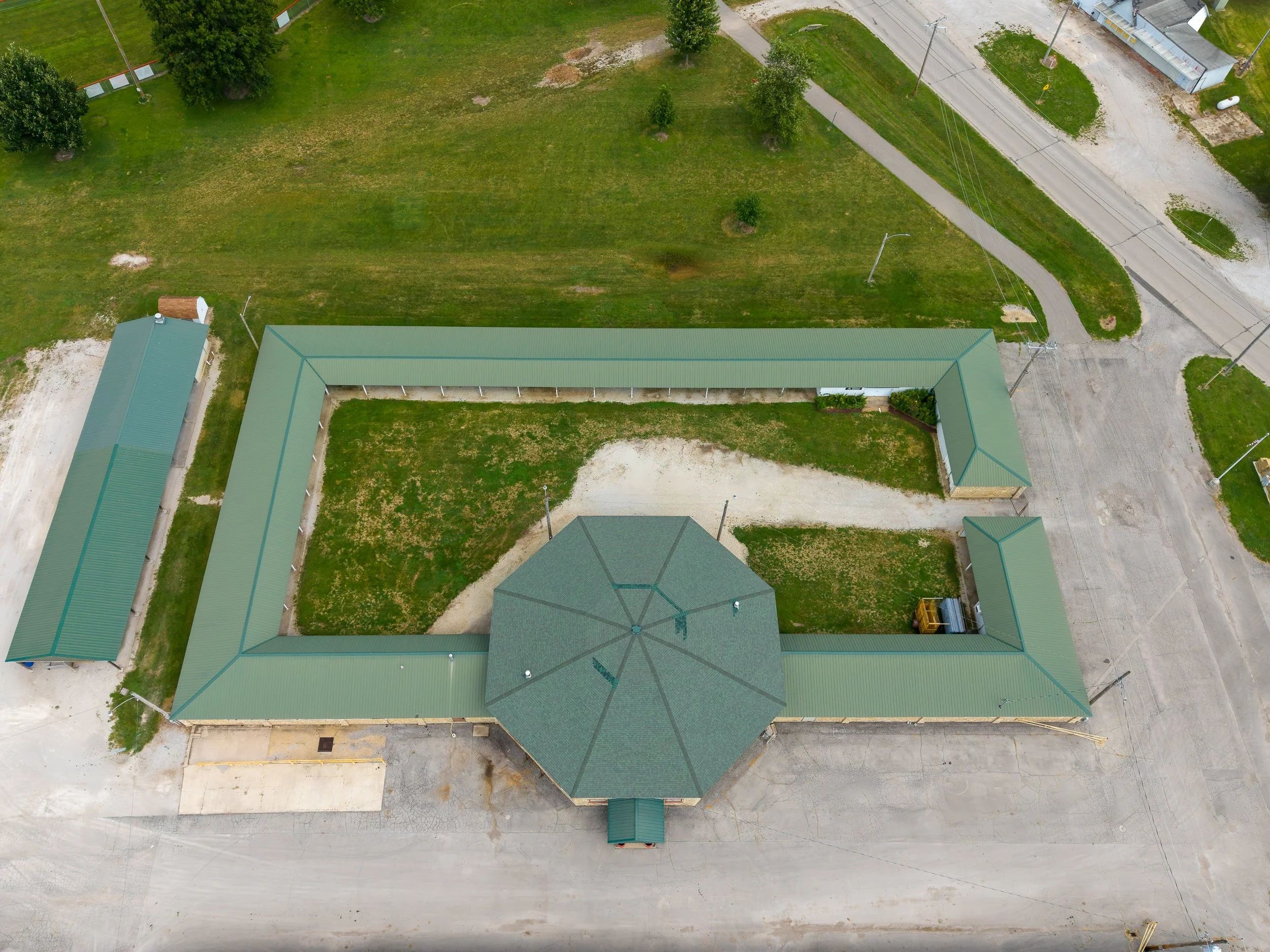
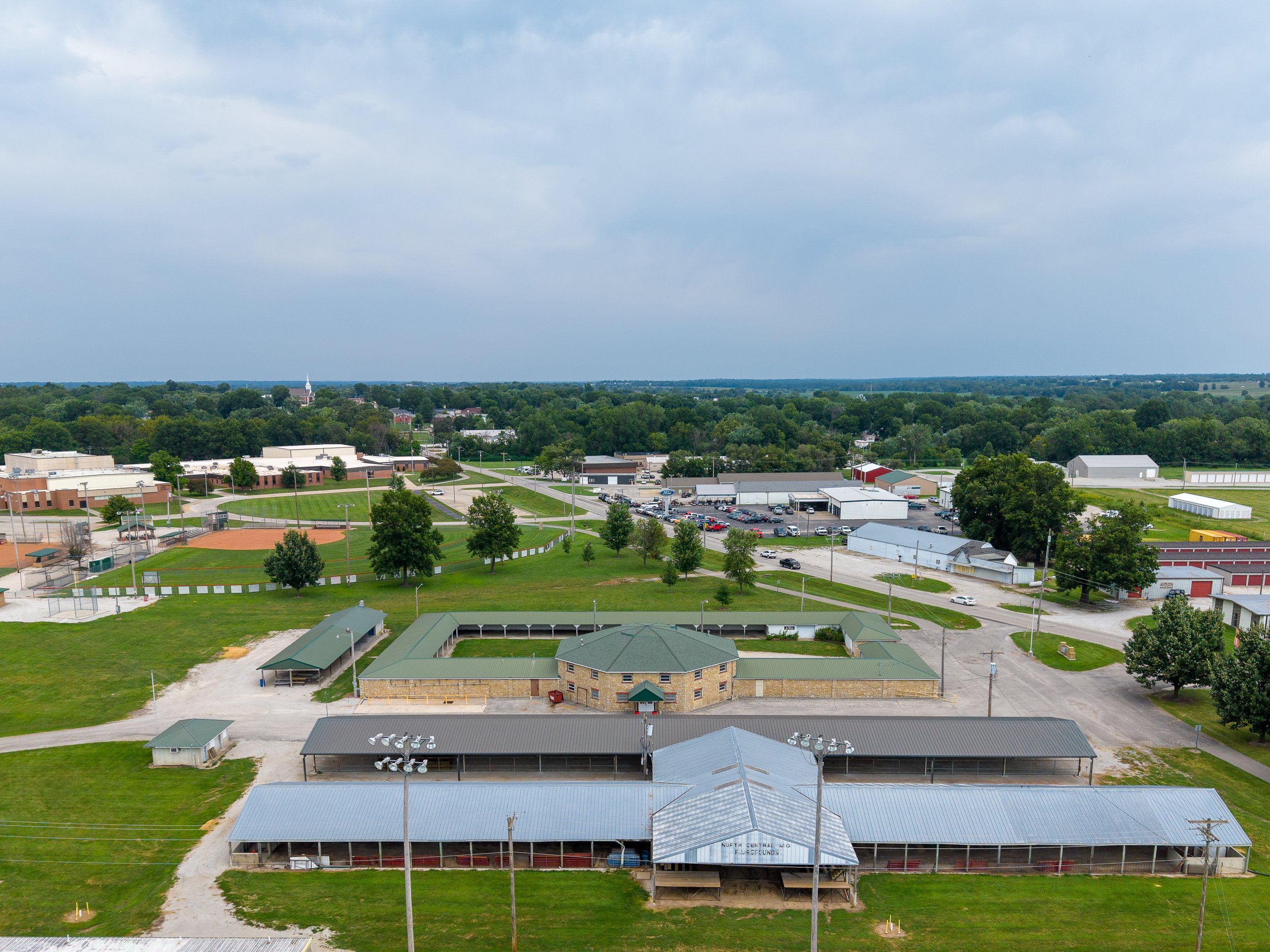
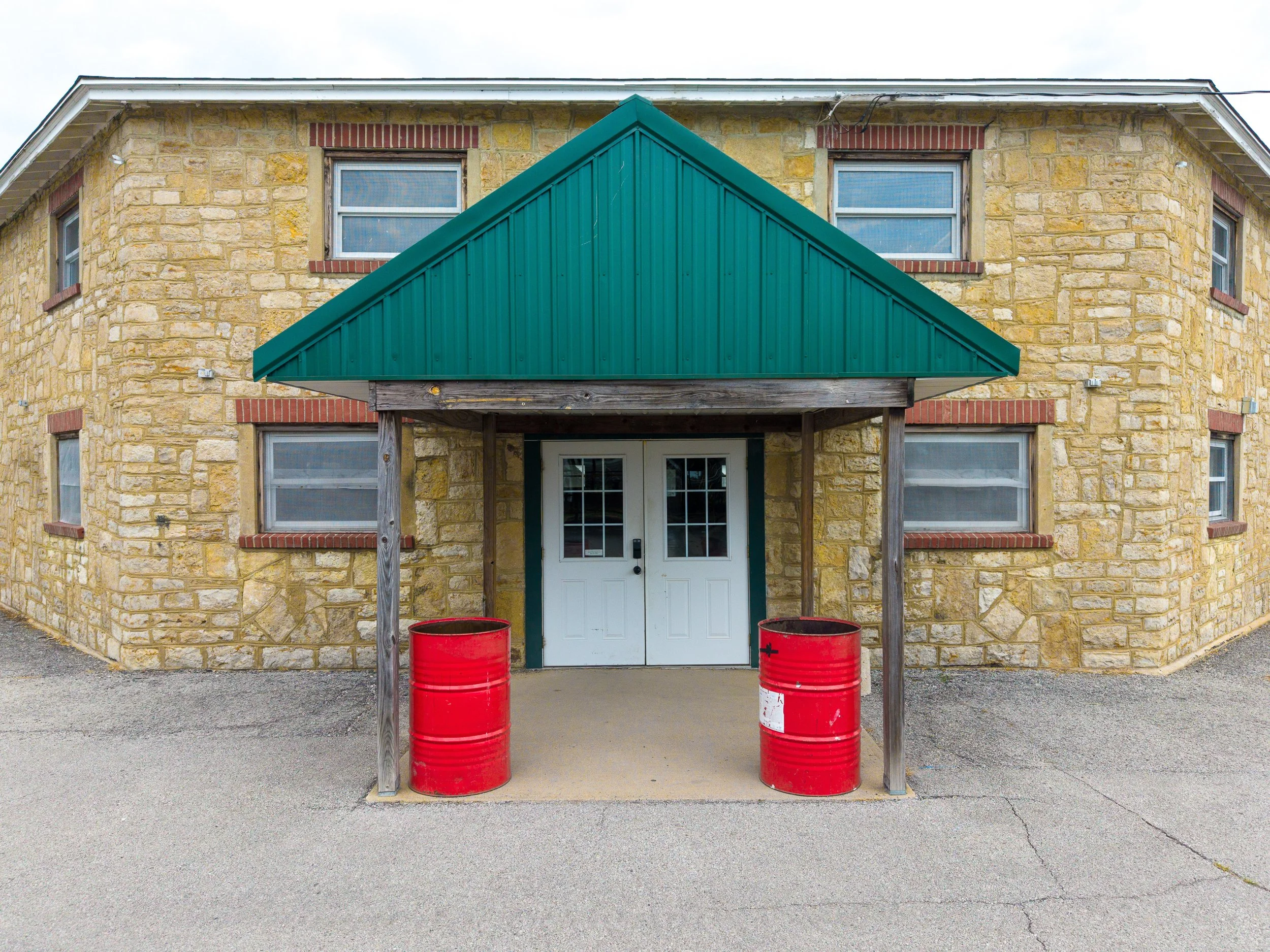
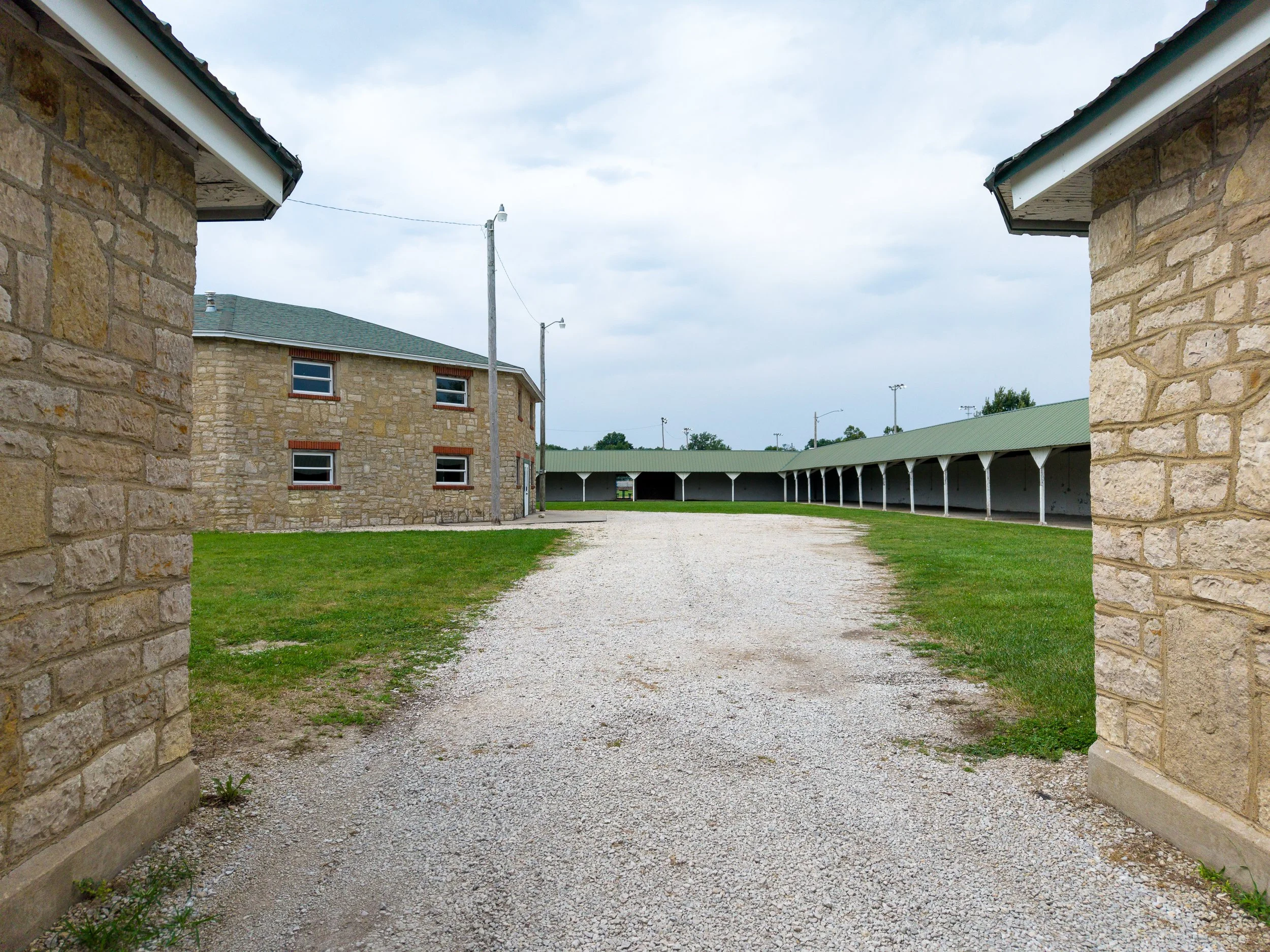
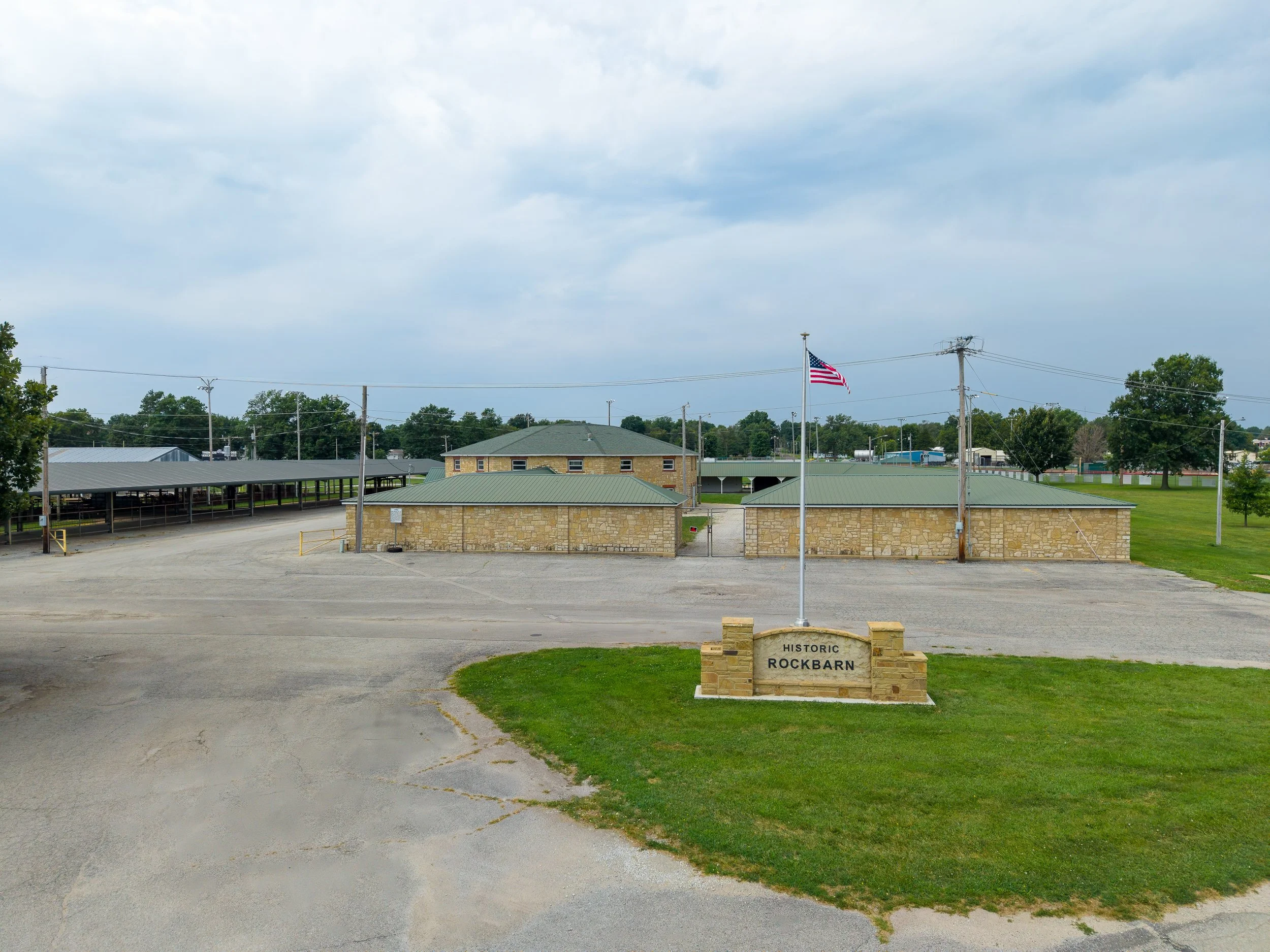
City Engineer Ashley G. Knight designed an octagonal show barn with stalls enclosing an open courtyard. Brick had been considered, but locally quarried stone cost less, and the WPA would cover the project’s largest expense: labor. The workers began cutting rock from the city quarry and laying walls that would stand sixteen feet high.
Construction lasted more than a year. The building was still unfinished on June 15, 1939, when forty lambs arrived for a 4-H and Future Farmers of America show. A registered ram sale followed in August. By September, the barn was ready for its first full Farm Revue.
The two-day revue was the largest since 1936, and the horse show returned for the first time in three years. Every stall was occupied before noon. As more livestock arrived, the animals already inside had to be crowded closer together. Some people had thought the new pavilion was too large. On its first full day, it proved smaller than the farmers needed.
Attendance and entries grew again in 1940. Officials stopped counting after the first one hundred animals. Bleachers surrounded the judging ring as the crowd gathered inside the stone walls that forty WPA workers had begun raising from a weed-covered tract two years earlier.