Five Points | Trenton, Missouri
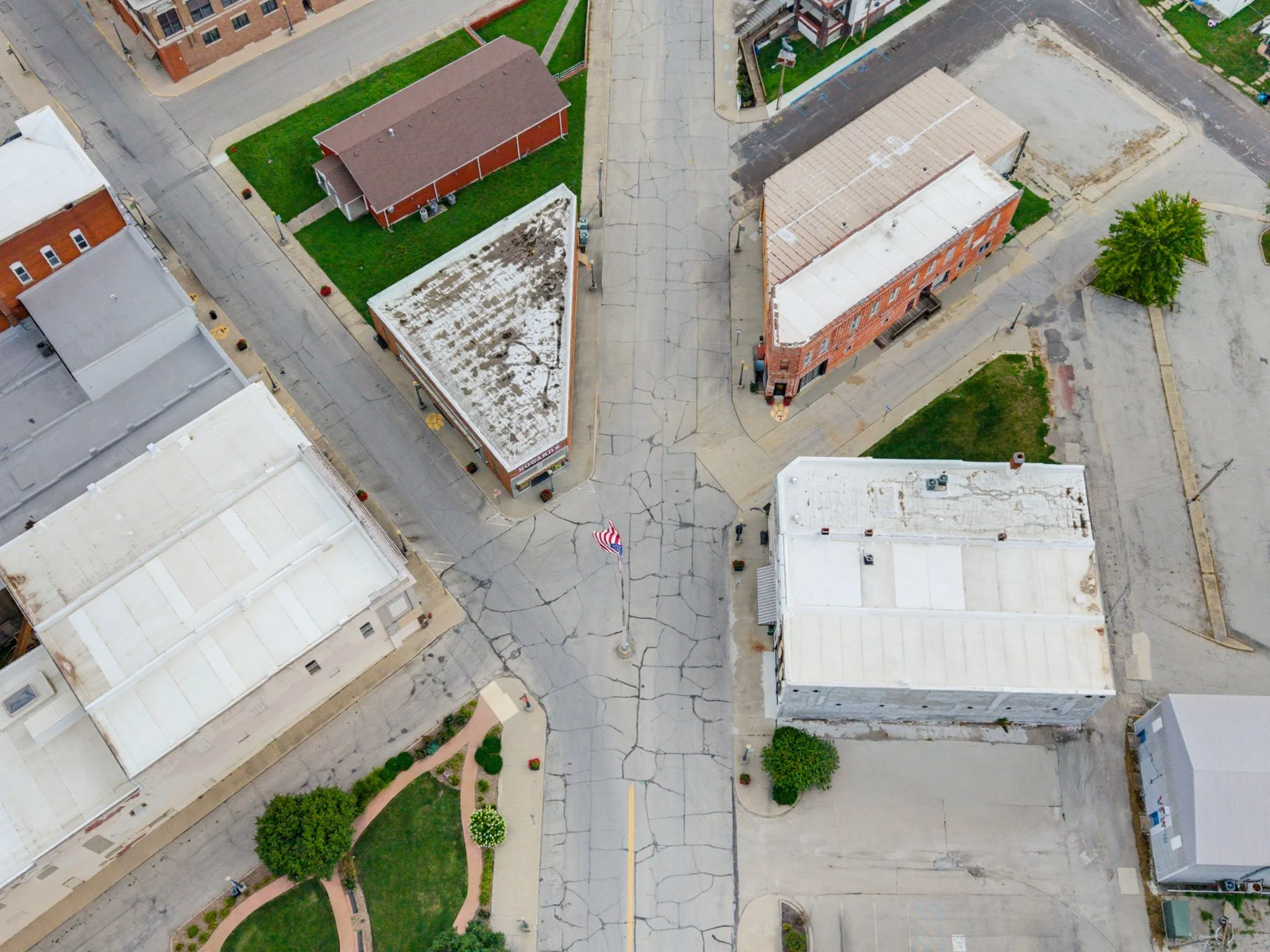
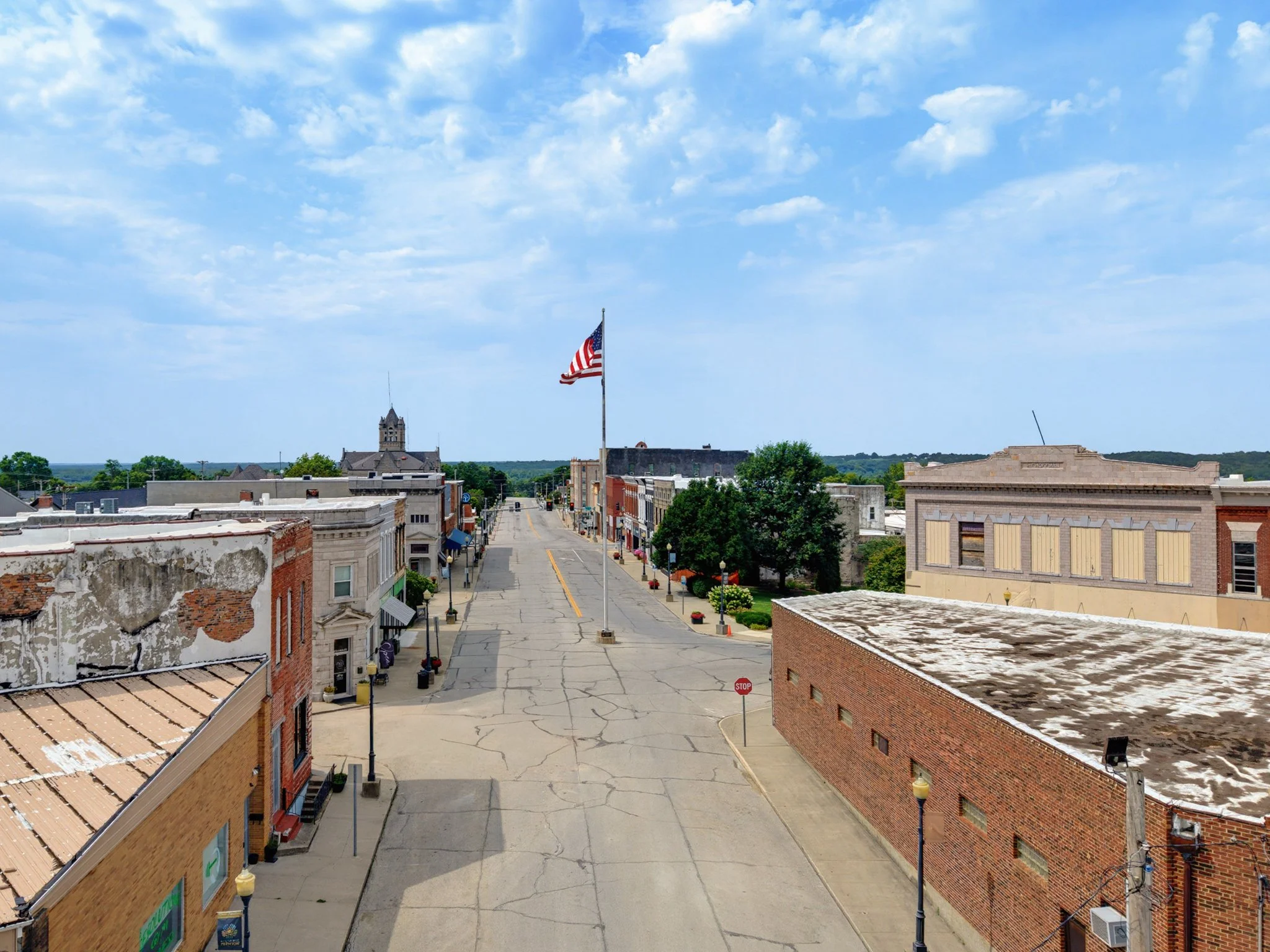
Five Points gets its name from the five street approaches that meet there: North Main, South Main, East 10th, West 10th and Tinsman Avenue.
The unusual intersection took shape in 1857. Trenton’s original streets had been laid out across two ridges in 1841. They followed the ground at angles, leaving triangular blocks instead of a square grid. On April 22, 1857, James R. Merrill divided part of his land north of Trenton into streets and building lots. This new section of town was called Merrill’s First Addition. When its straighter streets connected with the older part of Water Street, they created the five-way crossing.
At first, most business remained near the courthouse and along Water Street. John H. Shanklin helped pull it toward Five Points. Shanklin had arrived in Grundy County from Virginia in 1846 with a small wardrobe and less than $100. He taught school near Trenton, studied law and became involved in local business and government. In 1868, he became president of the Chillicothe and Des Moines City Railroad Company. Trenton had fewer than 1,000 residents and no direct rail connection. Earlier railroad proposals had failed, and an unfinished roadbed still lay between plans on paper and a working railroad. Shanklin helped negotiate its transfer to the Chicago and Southwestern Railway Company, which agreed to complete the line through Grundy and Mercer counties. Voters approved $50,000 in bonds on the condition that the railroad pass through town. Residents later offered another $10,000 and about $3,000 worth of land to secure a roundhouse and permanent machine shops.
On June 24, 1871, workers laid the first rail inside Trenton’s corporate limits. At 3 o’clock that afternoon, they drove the last spike at the depot. A large crowd had gathered to watch. When the hammering stopped, the crowd gave three cheers followed by one final loud yell, a popular celebration at the time known as “three cheers and a tiger.” Residents were then offered a free ride to Tindall and back aboard the construction train. The railroad quickly changed Trenton. The population rose from 920 in 1870 to 3,340 in 1880, and merchants moved east toward the depot. By 1881, a county historian reported that the old business district southwest of the courthouse had lost its leading stores. He expected commerce to remain “in and around what is called the Five Corners.”
Shanklin was also part of the next chapter at the intersection. He and James Austin had opened Shanklin & Austin Bank in 1869. In 1872, the bank erected the first flagpole at Five Points. The original wooden pole lasted about ten years. A second pole followed. The third was later reported to have stood for nearly 120 years. As the intersection grew busier, Trenton improved the streets around it. In 1904, the city paved Water Street with brick from the courthouse past Five Points. North Elm Street was paved the following year. Water and Elm later became South and North Main Street.
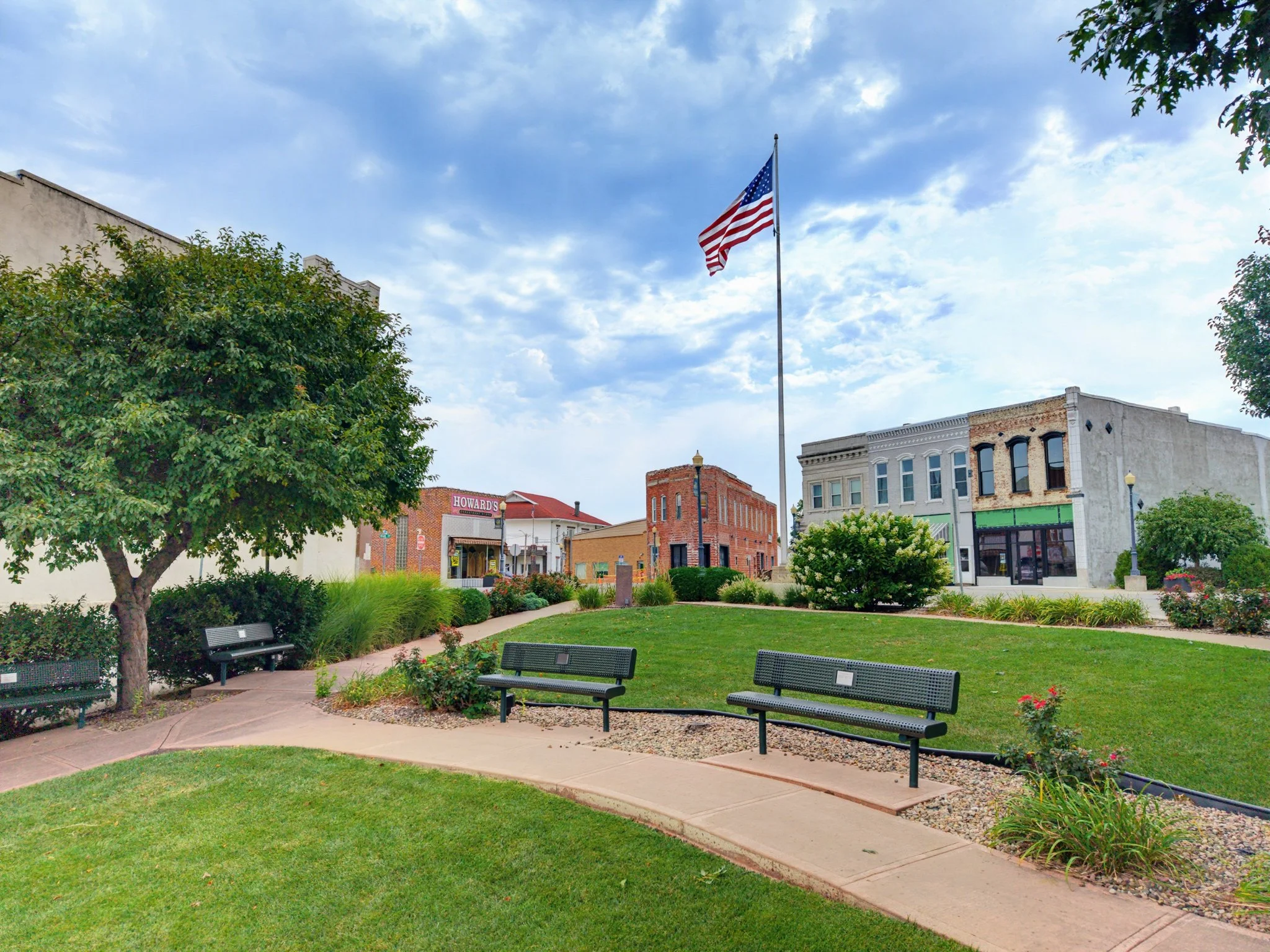
By 2011, holes had opened in the third flagpole and moisture was corroding it from the inside. Mark Robinson led a campaign to replace it. Private donations paid for the pole, flags and base materials, while the city handled the lighting. The fourth flagpole was erected in 2012. A marker at its base records the original pole, its replacement and the place Five Points holds in Trenton’s history. The railroad depot and machine shops that shifted Trenton’s business district are gone. The fourth pole still stands where the five street approaches meet, in the same place Shanklin & Austin Bank raised the first in 1872.